
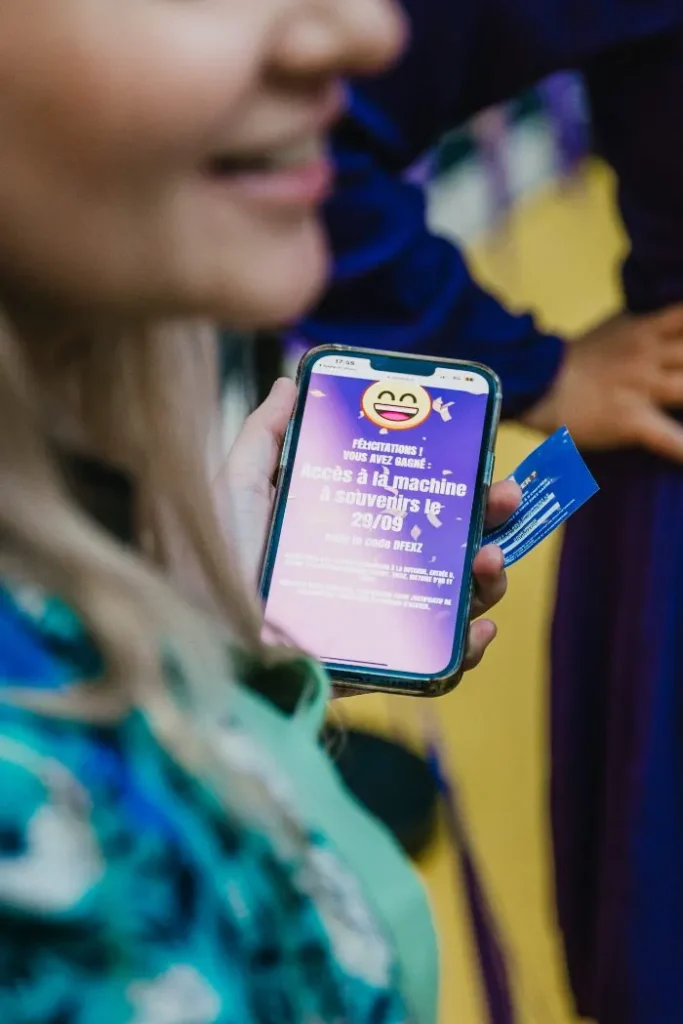

Marketing automation involves triggering messages based on an event rather than on a manually selected date. A customer signs up, makes a purchase, or has not returned for three months: each situation triggers the appropriate predefined message, without anyone having to initiate the send.
What is marketing automation?
Marketing automation refers to sending messages triggered by a customer’s behavior rather than by a one-off decision. You write the message once, define the situation in which it should be sent, and it is sent every time that situation occurs.
A workflow consists of three elements. A trigger that describes the event: a sign-up, a purchase, a visit, or no visit. A condition that filters recipients: only customers from a particular store, or only those who have agreed to be contacted. And a message sent through the appropriate channel.
The rest is configuration: the delay before sending, what happens next if the customer does not respond, and stopping the workflow when they return to the store.
How it differs from the email campaigns you already send
A campaign is sent on a date you choose, to a list you have created. A workflow is sent at a time triggered by the customer, only to the relevant person.
In practical terms, this changes the workload. A campaign requires time every time it is sent. A workflow requires an initial time investment, followed by monitoring. That is the real shift, and it is also why a poorly written workflow can keep running for a long time before anyone notices.
Three workflows that run in a retail business
The welcome message. A customer leaves their contact details in-store, through a contest, or in a questionnaire. The welcome message is sent immediately afterward, while they still remember their visit. It reminds them who you are and what they will receive. It is the easiest scenario to set up and the one that delivers visible results the fastest because it reaches them at the right time.
La relance d’un client qui n’est pas revenu. Le déclencheur n’est pas une action mais son absence : aucun passage depuis un délai que vous fixez. Le message repart vers ce client seul, avec une raison de revenir. Vous pouvez alimenter votre base depuis vos magasins pour que ce déclencheur repose sur des passages réels et non sur une estimation.
The post-purchase message. A few days after an in-store purchase, a satisfaction survey is sent automatically. It measures how the experience went and invites satisfied customers to leave a public review. It also adds to what you know about each customer, making subsequent scenarios more relevant.
To see which of these three scenarios makes the most sense for your business: Book my demo.
What changes when your customers shop in-store
Most content about marketing automation describes a specific use case: nurturing a prospect through a long B2B sales cycle. This is known as lead nurturing, with content sequences that support a decision that can take months to make.
This model is valid, but it simply does not fit a retail business. In your store, the decision is made in just a few minutes in front of a shelf. The customer does not need to be nurtured; they need a reason to come back.
The shift is clear. The value lies not in acquiring a prospect, but in bringing back a customer you already know. Your most profitable campaigns therefore focus on what comes next: the second visit, the seasonal return, and the reactivation of an inactive customer. This is what the All in Box promise, acquire AND retain, covers, and it is the half that most content on the subject fails to address.
All in Box allows you to automate your follow-up campaigns by email and SMS using a single database shared across all your stores. Choosing the right channel for each campaign depends on what each one does best.
Ces scénarios s’appuient sur une base clients tenue à jour : le CRM.
Where to start and how to know whether it is working
Start with the database, not the campaign. A campaign running on duplicate contacts, without consent, or without being linked to a store will generate unnecessary messages at high speed.
Then set up a single campaign, the simplest one, and let it run long enough to draw a conclusion. You can segment your customer database by date of last activity, postal code, gender, age range, etc., and initially run the campaign for only part of the database.
A campaign should tell you three things: how many customers entered it, how many responded to the message, and how many actually returned. The third is the only one that truly matters, and it is the one most dashboards overlook.
Compare equivalent periods and comparable customers. A follow-up campaign assessed in December will tell a different story from the same campaign assessed in February.
A platform and a team
All in Box is a French marketing platform founded in 2018 and based in the Grand Est region. The data you collect remains yours, and its processing complies with the GDPR, which matters when automated workflows run continuously across your customer database.
Eden, the AI built into All in Box, prepares workflows and suggests messages for you. You review, adjust, and approve them. Eden never triggers anything on its own. To see what Eden actually does within a workflow, a demo is more informative than a description.
A dedicated marketing coach based in France helps you set up your first workflows. As for the terms: unlimited users, unlimited support, and no setup fees. Pricing depends on the size of your business, not on the number of workflows you run. For details, see All in Box plans.
To set up your first workflow using your actual database: Book my demo.
FAQ
How do you choose a marketing automation tool?
First, look at where your contacts come from and where they are stored. A tool that does not connect to your data collection system will force you to perform manual imports, and the workflow will break down there. Next, check which channels are supported, how consent is recorded, and what happens if you leave: the portability of your database is a key selection criterion, not a minor contractual detail.
How much does a marketing automation solution cost?
Pricing models vary based on the number of contacts, sending volume, enabled channels, or number of users, and two plans shown at the same tier may not include the same features. At All in Box, pricing depends on the size of your business. Full details are available on the plans page, and your coach will review them with you during the demo.
Do you need a lot of contacts for it to be useful?
No. A welcome workflow is valuable from the very first contacts you collect because it runs continuously as contacts come in, rather than relying on volume. What matters more is the quality of your database: contacts linked to a store, with recorded consent and a usable date for their most recent visit.
How long does it take to launch your first workflow?
The workflow itself can be set up quickly. What takes time is the preparation: bringing your stores’ contacts together in a single database, checking consent, and deciding on the message. Your coach will help you structure this process and start with the lowest-risk workflow.
How is your customers’ consent handled in a workflow?
Consent determines whether a customer can enter the workflow. Customers who have not agreed to be contacted will not enter it, regardless of their purchasing behavior. Consent is obtained when their information is collected, along with its date and purpose, and can be withdrawn just as easily. Have your wording approved by your legal advisor.
The hardest part is not setting up a workflow, but choosing which one is worth launching first. Look at your database, in-store visits, and consent records: the answer is almost always there.