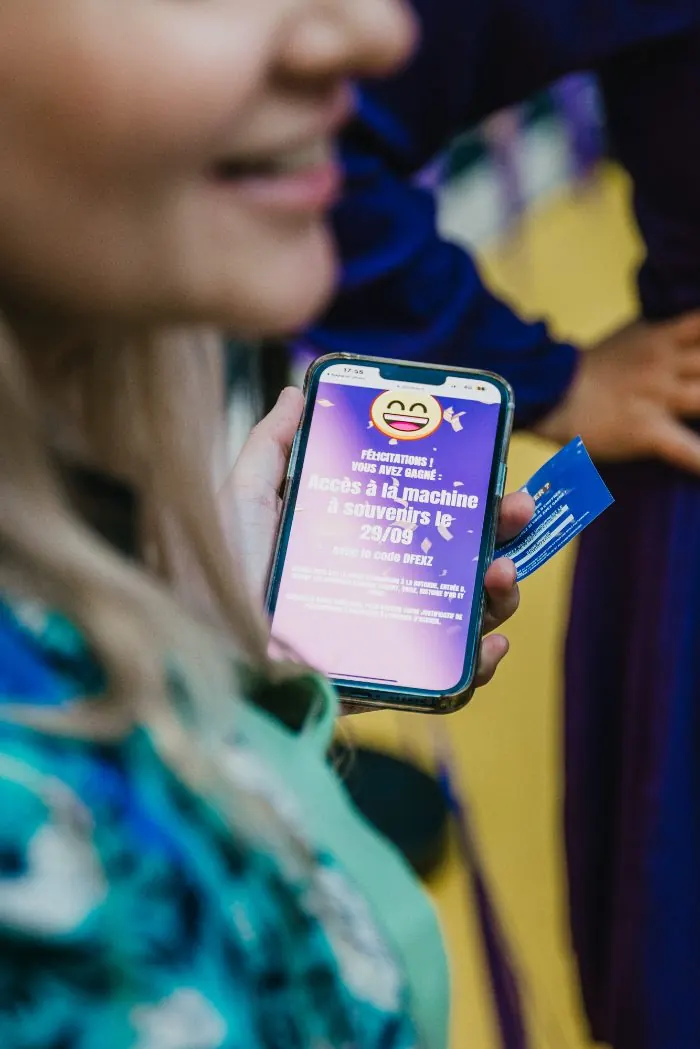


Customer retention encompasses all the strategies and actions implemented to encourage customers to take action (such as making a purchase, joining a loyalty program, referring others, or recommending the brand) so they remain close to the brand and maintain a strong relationship with it.
So, which high-performing and effective communication channels should you prioritize to maintain customer loyalty? Loyalty does not depend on a single channel, but on consistency across channels. Here are the strategies to activate, along with the six-step method for implementing them.
Customer retention is not customer acquisition: why channel choice matters
There are many channels available for retaining customers, and no single channel is better than the others. The right retention channel is one that the customer has agreed to, reaches them at the right time, and does not overwhelm them.
Traditional communication channels
Newsletters and email
This is the go-to channel favored by many businesses for sharing stories and information and maintaining long-term customer relationships. It offers a key advantage: businesses can communicate with all their customers at the same time. Everyone receives the same message and the same level of information, with nothing lost along the way.
Newsletters are a trusted channel for customers: they arrive in a private, secure space, their inbox, and subscribers have chosen to receive the information, making them more receptive and engaged.
The more regularly a newsletter is sent (for example, once a week) the more it creates positive momentum and builds long-term loyalty among existing customers, as well as prospects who have just subscribed.
In addition, it is affordable, measurable, and offers a good return on investment in terms of results such as web traffic, visibility, and sales. It also allows you to segment your audience based on the data you have about your contacts (gender, age group, postal code, and affinity segments) for more precise campaign targeting. This is where the quality of your customer database makes all the difference.
Discover the golden rules for creating an effective and powerful newsletter, and what actually gets recipients to open it.
SMS
This channel is also widely used by businesses to communicate specific information to their customers quickly and effectively. Faster than a newsletter, SMS delivers instant impact. It has a very high open rate, around 97% to 98%, and is read almost immediately, within 3 to 4 minutes of receipt. It appears prominently on the phone screen, making it hard to miss.
Just like newsletters, SMS allows you to send segmented, targeted campaigns based on the data available in your CRM.
It is particularly effective for reminders, special opening hours, exclusive offers, and birthday greetings. These messages, triggered by a date or customer behavior, can be set up once and sent automatically using marketing automation.
Finally, the value of SMS lies in its brevity: limited to 160 characters, it gets straight to the point and makes the offer or expected action quick to understand.
Emerging channels
RCS
RCS, or Rich Communication Services, is a next-generation SMS technology that replaces traditional SMS and MMS. While SMS is limited to 160 characters of plain text, RCS removes these constraints and turns a simple text message into a genuine brand experience.
It offers a new, enhanced experience featuring high-definition visuals, videos, GIFs, product carousels, a verified brand logo, and longer, interactive text. It also becomes a two-way communication channel, with real-time typing indicators and delivery and read receipts.
RCS is also interactive: you can add clickable buttons (calls to action), quick replies, or direct links to a web page, parcel tracking, or appointment booking. Customers can take action without leaving the conversation.
RCS also reassures customers: they receive a message displaying the brand’s official name and logo, along with a verification badge. This removes any doubt about the sender and helps combat spam and phishing.
The result: marketing performance that significantly exceeds that of a traditional SMS campaign, with reported click-through rates three to ten times higher. One final advantage: RCS works natively in the phone’s messaging app on both Android and iOS, so your customers do not need to download anything.
The wallet pass and push notifications
The wallet pass is literally a card that remains on your customers’ phones all year round, alongside their bank, loyalty, and transit cards. It works with both Apple Wallet (iOS) and Google Wallet (Android), the two wallet apps already available on all phones.
Its first advantage: it never gets lost. No more loyalty cards cluttering up wallets or being forgotten at home, all of them are stored in one place, on the phone. Customers can add your card in seconds by scanning a QR code or using a link, with no lengthy registration process or separate app to download for each brand. Access also remains secure, protected by the phone’s authentication system (Face ID, Touch ID, or passcode).
The card is also dynamic. It opens instantly from the lock screen and, on compatible phones, geolocation can automatically display it as customers approach your store, at the exact moment they reach the checkout. You can update it remotely: a points balance, a new offer, or opening hours are updated on every cardholder’s card, with no action required on their part. All that remains is to decide what the card rewards: that is the key to a well-designed loyalty card.
Then comes the real driver of customer loyalty: wallet push notifications. The notification appears directly on the lock screen, alongside all the others. It is the most direct channel available: no algorithm between you and the customer, no cluttered inbox, and a high open rate. While an email waits to be opened and a social media post depends on the reach the platform chooses to give it, a wallet push notification appears directly in front of the customer because they personally chose to install your card.
Online reputation and Google reviews
Your Google reviews do not speak only to new customers. Every response you publish is read by people who already know your business, and it shows them how you treat customers after their visit. This is where online reputation stops being merely a showcase and becomes a driver of customer loyalty.
Three factors determine your search ranking: the number of reviews, the average rating out of 5, and the response rate. Your customers control the first two. The third is entirely up to you, and the method for getting more reviews comes down to a few simple settings.
Respond to every review, not just unhappy customers. A positive review left unanswered means leaving a loyal customer without a word. A negative review is a second chance, not a threat. A customer who complains can still be reached. A calm response that acknowledges the problem and offers a specific next step does two things at once: it can win that customer back, and it shows everyone who reads it afterward how you handle an issue. The method has four steps.
The next step is to find out where you stand. Track four metrics: the number of reviews, the average rating, the average response time, and the percentage of reviews you have answered. For the last one, aim for one hundred percent. Ask for a review immediately after a good visit, while the customer is still happy, not three weeks later, when they have forgotten.
Comparison: which channel for which purpose
To help you choose quickly, here is how the loyalty channels compare, based on what each one does best.
| Channel | Ideal use | Open rate | Cost | Intrusiveness | Audience |
|---|---|---|---|---|---|
| Newsletter and email | In-depth content: informing customers and maintaining the relationship at scale and through segmentation | Varies depending on the contact list | Low | Low, private space and expected message | Your own audience, subject to deliverability |
| SMS | Urgent and specific messages: reminders, exclusive offers, birthdays | 97% to 98% | Medium to high, per message | Medium to high, read within minutes | Your own audience, with opted-in phone numbers |
| RCS | Offers that need visuals: carousels, appointments, order tracking | Similar to SMS, with 3 to 10 times more clicks | Medium to high, per message | Medium, displayed in the same place as SMS | Your own audience, via native messaging |
| Wallet pass and push notifications | Lasting loyalty: an always up-to-date card and lock screen notifications | High | Low once set up | Medium, but the customer chooses to add the card | Yours, with no algorithm |
| Google Reviews | The public-facing relationship: respond, reassure, retain | Not applicable, the customer comes to you | Free, but time-consuming | None | Google’s, not yours |
Bring all these channels together in one place
Newsletters, SMS, RCS, wallet passes, and Google reviews only make sense together if they use the same customer database. All in Box brings them together on a single platform, with a marketing coach who helps you choose the right channel for each message. Discover the All in Box loyalty program.
FAQ
Which channel should you choose to build customer loyalty?
No single channel can build loyalty on its own. Loyalty depends on consistency across channels, not choosing one over another. The right channel is one the customer has agreed to, which reaches them at the right time without overwhelming them. Newsletters deliver in-depth content, SMS handles urgent messages, wallet passes maintain long-term relationships, and Google Reviews support public-facing relationships.
What is the difference between SMS and RCS for building customer loyalty?
SMS is limited to 160 characters of plain text and gets straight to the point. RCS turns the same message into a branded experience with high-definition visuals, product carousels, clickable buttons, and a verified logo. With RCS, customers can take action without leaving the conversation. Reported RCS click-through rates are three to ten times higher than those of traditional SMS.
How does a wallet pass help build customer loyalty?
A wallet pass is a loyalty card that lives on the customer’s phone alongside their payment and transit cards. It cannot be lost, can be opened from the lock screen, and can be updated remotely: a points balance or new offer can be changed for every passholder without requiring any action from them. Its push notifications appear directly on the lock screen.
Should you respond to every Google review?
Yes, all of them, not just the unhappy customers. A positive review left unanswered means ignoring a loyal customer. A negative review is a second chance: a calm response that acknowledges the problem and offers a concrete solution can win that customer back and show future readers how you handle an issue. Aim to respond to 100% of reviews.
How often should you send a newsletter to build customer loyalty?
The more regularly you send a newsletter, the more it strengthens loyalty over time. Sending one newsletter per week creates positive momentum among both existing customers and prospects who have just signed up. Newsletters remain the key long-term channel: they inform, tell stories, and maintain relationships at scale, while allowing you to segment your database based on the data available for each contact.
Are SMS messages read more often than emails?
SMS messages are read almost immediately, within three to four minutes of being received, with an open rate of around 97% to 98%. An SMS appears in the center of the phone screen, making it difficult to miss. An email waits to be opened but remains the best channel for in-depth and longer messages. The two complement each other rather than compete.